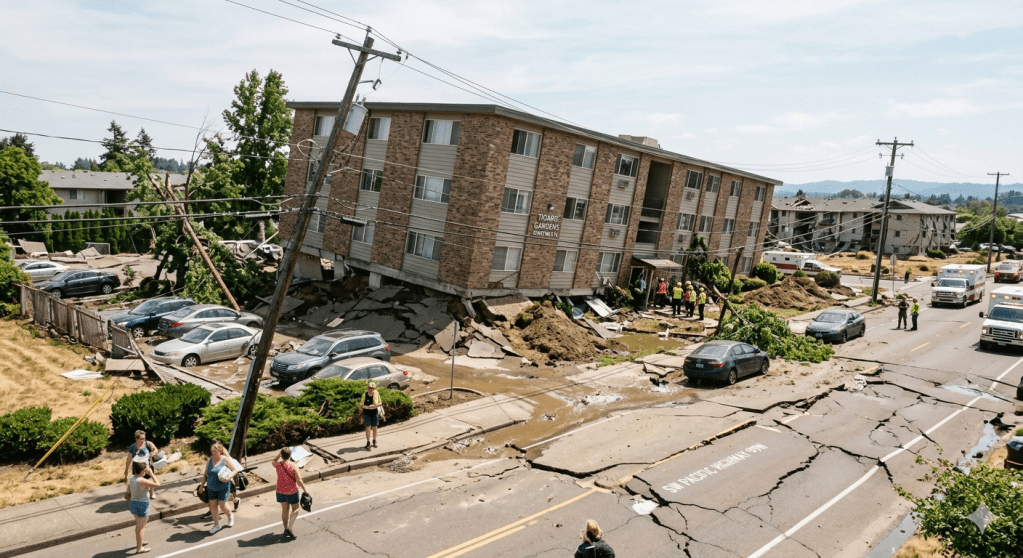
Before you start collecting food, water, and a way to stay warm, you need to think about where you’re going to rest your head at night. This is a big decision – it informs the types of supplies you’ll need, and how much of them you should be stocking.
Before deciding, let’s make sure you’re aware of the area hazards we’ll face in Tigard. By thinking them through and Googling the risks at your particular address, you may learn that your existing plan is sound, or that you’re in a flood plain that could wipe out your plan and supplies as soon as Scoggins Dam breaks.
Let’s go through some area hazards that should be on your radar as you think this through.
Area Hazards
- Cold
- Flooding
- Fires
- Heat
- Liquefaction
- Smoke / Toxic Plume
- Raw Sewage in the River Water and Homes
Cold
If the quake happens during the winter, you’ll need to keep yourself and your loved ones at the following temperatures, which can make living in an unheated tent difficult.
- 68-70°F: The recommended minimum for vulnerable populations, including those age 65+, children, or individuals with chronic illnesses.
- 61°F: Increases the risk of respiratory infections and cardiovascular strain as the body works harder to stay warm.
- 54°F: Poses a high risk of hypothermia, especially for the elderly or those with limited mobility.
Flooding
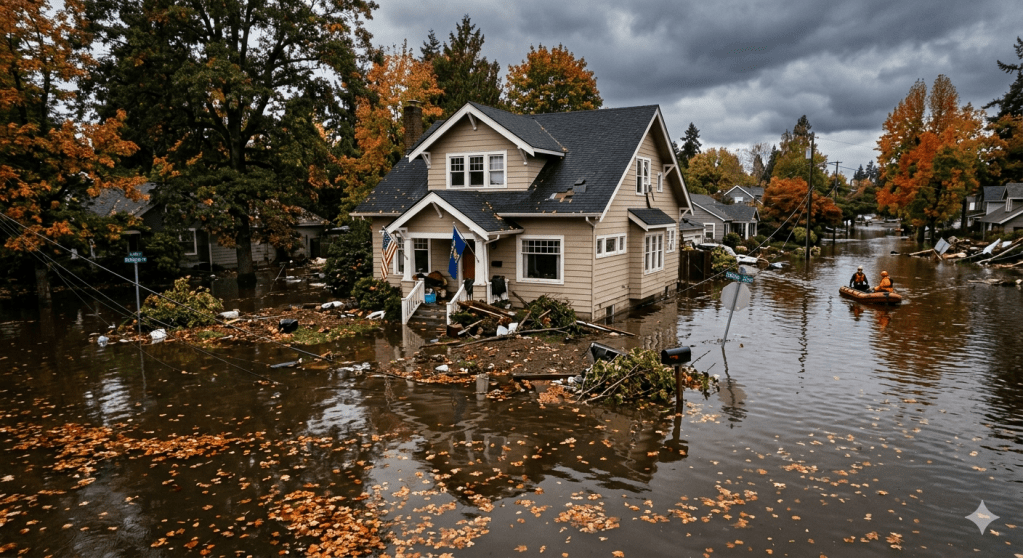
Parts of Tigard are inside a flood plain both near rivers, and also particular low points could be impacted if Scoggins Dam broke. Scoggins Dam is near Henry Hagg Lake, and is known to need seismic updates, which are in progress at the time of writing. Take the time to learn whether your address is in any of the areas that could be impacted by flooding, to decide on the strategy you’ll want to take for shelter.
Fires
Houses and buildings may catch on fire after the quake. This could be because of gas lines that break and ignite, and it could also be because of electrical sparks that are thrown from damaged building wiring. Of course, after a quake, you should immediately shut off your gas and your main electricity, but we’ll cover that in a different post.
The question here is, could fires from other homes easily leap to your home? This largely depends on the density of homes in the area where you live. Fire is more likely to progress to your home if you live in an area with dense structures.
Heat
If the quake occurs during the summer, it will be necessary to keep people cool. This could be quite challenging if the river is unsafe to swim in due to raw sewage being released into the river when the water sanitation facilities have their generators fail.
If your home has a partially or fully below-ground basement, staying inside and low may be enough to keep you cool.
Here are the temperatures at which you need to expect some impact to human functioning.
- 80°F to 90°F: Caution. Fatigue is possible with prolonged exposure and physical activity.
- 90°F to 103°F: Extreme Caution. Heat stroke, heat cramps, or heat exhaustion are possible with prolonged exposure and/or physical activity.
- Above 105°F: Danger. Heat stroke, heat cramps, or heat exhaustion are likely.
Liquefaction
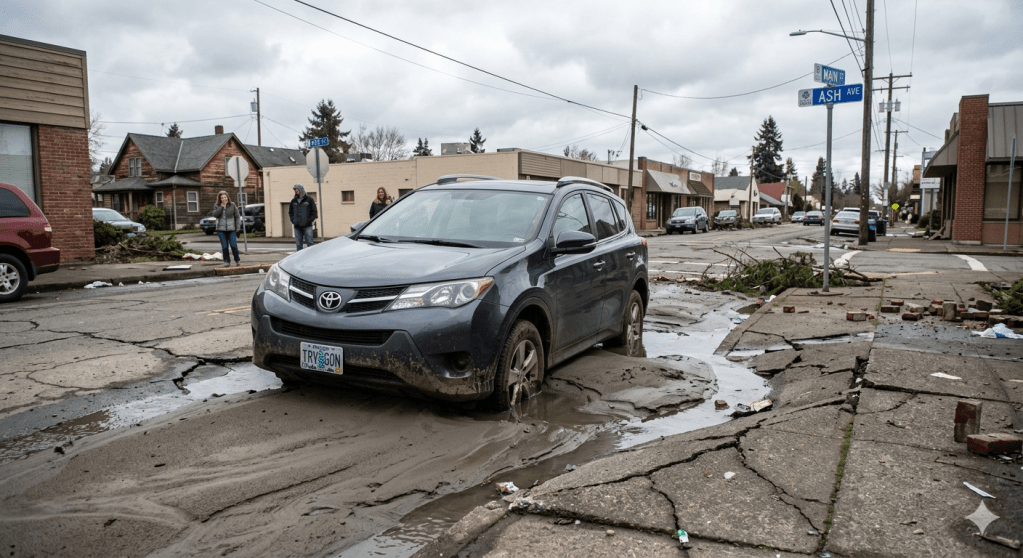
So, it’s hard to imagine why liquefaction would really be that important during or after a quake. Sure, the ground becomes less solid, but it’s not like quicksand in Indiana Jones or anything, right?
To get your head around this a bit more, spend a little time Googling for images of buildings after liquefaction, and cars after liquefaction. In short, they sink and tilt.
Liquefaction can cause buildings to become structurally unsafe to be in after a quake because their foundations have tilted, cracked, or gone askew. It can cause cars to become partially submerged and unusable. It can also cause huge rises, drops, or cracks in the road that make them unnavigable by your most tricked out Jeep Wrangler.
With an understanding of this risk, use Google Gemini or a similar source to assess the risk of liquefaction happening at the address where you live.
Regardless of your home address, you may also want to invest in an inexpensive mountain bike to get around immediately after the quake, which can easily be lifted to pass by, say, a 3 foot tall crack in the road that your Toyota or Subaru just can’t get over.
If you live in a liquefaction zone, you probably need redundancy both with your shelter and transportation. If your building or car fail, you want a backup like a tent or RV and a bike.
Smoke / Toxic Plume
The notorious New Yorker article that unnerved everyone in Portland back in 2015 pointed out that the industrial area in North Portland may cause a large fire, and it could cause unknowable toxic chemicals to be released into the air. At times, wind from that area blows into Tigard due to our geological landscape.
The “good” news is that folks over ten miles away aren’t likely to be killed by these gases. They may burn for hours or days. Anyone who does have a structure to stay in can stay inside and make a point of breathing inside air until they subside. This could be done by taping off broken windows with plastic, and limiting how much doors are opened, to minimize the amount of outside air.
This could also make it quite difficult for people to live in tents immediately after the quake, especially for those with asthma, COPD, or any other condition that could compromise their ability to abide poor air quality.
Raw Sewage in the River Water and Homes
Raw sewage facilities sometimes, in emergency situations, release waste into public rivers or into unintended places. This could be into a river that many are using for drinking or bathing, or the local lines in front of your house could break due to shaking or liquefaction. When raw sewage can’t take its normal routes, it takes the path of least resistance. This could be a path where it back flows into the “out” pipes of your house, or comes up through the floor, if you have a half-underground or fully underground bottom level.
Raw sewage back flowing into your house is even more likely if your neighbors keep using their toilets, but it can’t leave through the main sewage line. If your house presents the lowest exit point in a system of connected sewage pipes with no outlet, your house is where it will end up.
Additionally, other people working to survive may urinate and/or defecate too close to river water. This will cause it to be so contaminated that normal hiking water filters won’t be sufficient. Cholera, dysentery, and typhoid are common killers after a quake due to people drinking contaminated water that they mistakenly thought was safe.
When deciding on your shelter strategy, contemplate how you will store or sufficiently purify enough water for your needs.
Wrap Up
Please take a moment to explore how the above issues could impact the specific address at which you live, and whether your goal is to stay in your building, car, RV, or tent. What will be your Plan A place to live after the quake? What about Plan B? Will you aim to stay in town, or to leave as soon as possible?
This doesn’t have to be a tough research project – just open up Google Gemini, stick in your address, and start asking about whether each of these hazards applies to you after a quake.
Clear-eyed thinking and preparation can change a terrible experience into a tackled experience, that you can survive perhaps even with nothing more than boredom and annoyance.
Other blog posts will explore practical ideas for warmth, food, water, communication, transportation, and more. We will be talking – solutions!
 Tigard's Unofficial Guide to Earthquake Preparedness
Leave a comment