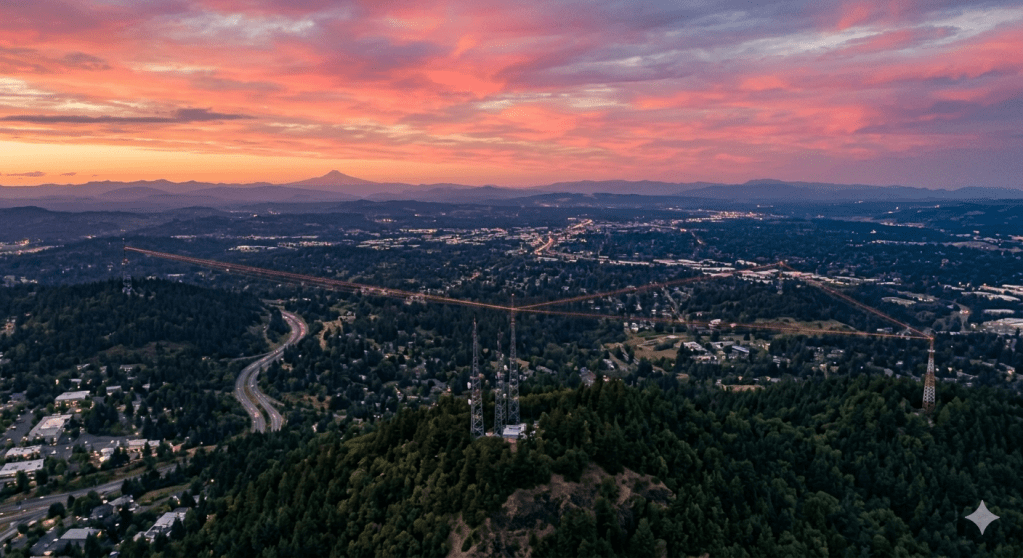
An AI-generated photo from Google Gemini, of multiple radio towers connecting to transfer information.
Situational awareness is a cornerstone of navigating any emergency. This post will explore your options with a specific focus on how Tigard residents can be resilient. It will cover multiple price points, levels of time commitment to learning tech, and it will cover how you can power whatever you select.
Overview of Options
Weather/Emergency Radio
Walkie Talkies (Family Radio)
Ham Radio
Maritime Radio (for Boat Owners)
Meshtastic & MeshCore
The Garmin Ecosystem
StarLink
Powering Your Choice
Solar generators
Gas generators
Your 12V car battery
Weather/Emergency Radio
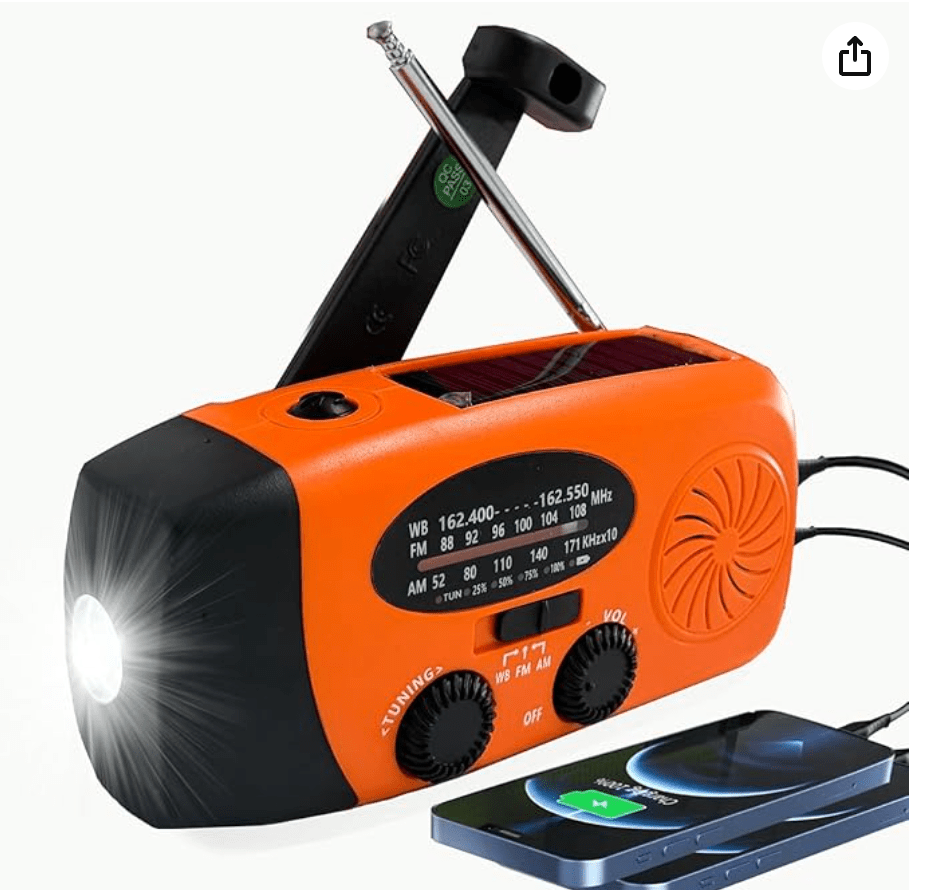
At a minimum, having a weather/emergency radio is a fantastic start, and maybe even a fantastic finish.
I probably have this one in my car, but it’s in red and an older model. It’s permanently plugged into a USB charger in there, and it’s never drained my battery. Wherever I go, it’s with me, and I could scroll around and listen to get updates about what’s around me after an emergency.
Before I moved to Tigard, I lived in West Linn. We were hit by an ice storm and the power was out for over a week in the winter. The hand crank was invaluable for getting updates about when power would be restored. Electricity wasn’t just out to my house, it was out to all the neighboring cell phone towers. I usually got 3 bars on my phone before the ice storm, but with the outage effecting everywhere, I only got one or less.
Having an emergency weather radio can be only $15 and you can keep it charged in your car. It’s a no-brainer, and it’s enough to help you get where you need to go after a quake.
91.5 FM (KOPB): This is the primary station for the region. If only one station is still on the air, it will likely be this one.
1190 AM (KEX): This is the secondary “LP-2” station for our area. AM signals travel much further and are more resilient than FM.
101.1 FM (KXL): Often used for live local news and emergency updates.
1610 AM (WQCI-718): This is a specific low-power station run by the City of Beaverton. We may be able to hear their highly localized reports if we’re near the city line.
Walkie Talkies
Cell phones will be down. We have a couple of kids who are middle school age-ish. We like to encourage their independence, but we feel better with connectedness. We may send them to Cook Park daily to get water, either from the river directly, or from a drinking water distribution truck the City of Tigard may have there.
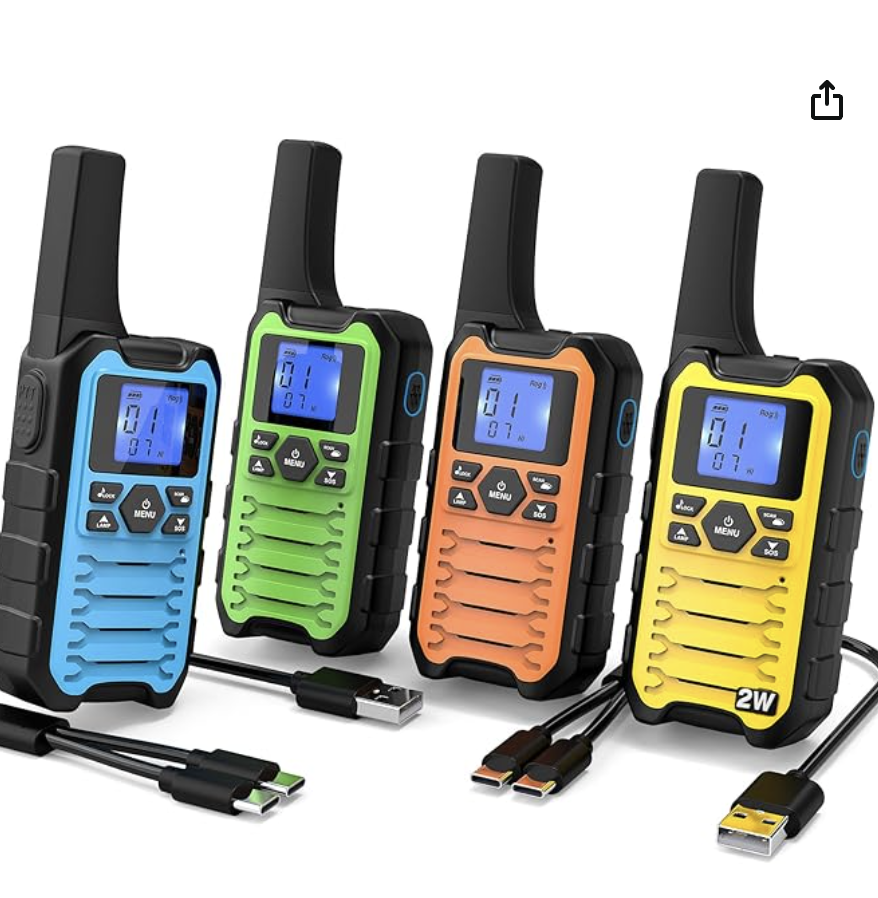
We have 4 walkie talkies, though they’re a different brand than this. Many work for 3 miles as long as they have a line of sight to the other walkie talkies. Many areas of Tigard are flat, so this isn’t a terrible idea. Also, if you live on a hill, you might have a line of sight to a lot of places.
On the other hand, they only have a few stations – up to 22, though they can be sub-divided on some handsets. There may be a lot of people competing for air time after the quake.
If you decide to go this route, keep them charged, and keep your messages short to keep the air open for other people.
As a note, we brought a bunch of handhelds to a campsite and our walkie talkie batteries burned down after only a day of the kids talking to us around the campground, and joking around doing “monster voice” to say hello over the air. So for more than one day of life, you will need to find a way to power them after the quake when the power lines are down.
Ham Radio
Okay, amateur radio seems like a really good idea to join, but it has a high barrier to entry.
The ham radio exam is excruciatingly boring and tedious to study for – and this is coming from a software engineer. (Yes, this blog is written by a Labrador retriever, but I am also a software engineer – surprise!) I couldn’t get through it. But it would still be useful.
After the quake, Portland has a plan to activate Neighborhood Emergency Teams (NETS), which will include NET Emergency Radio Resources. Tigard doesn’t have such a plan as far as we can tell, but we can at least gain more situational awareness by simply listening to these stations and sharing information with our neighbors.
Are bridges open? Are food drops or shelters available? Ham could help us find out sooner than weather radio!
According to NET’s website:
“NET amateur radio operators meet on the air every Sunday at 8:10pm (2010) on the Amateur Radio Relay Group (ARRG) repeater, 147.040MHz, +600 kHz, 100.0 PL. This net has a curriculum and the net control deals with specific topics of interest to NET amateur radio operators, such as recent deployments, features of emergency radios, antennas, etc.”
“There is also a second net, the NET Chat Net, that takes place the hour before on a separate repeater! NET amateur radio operators join this informal chat Sunday at 7:00pm (1900) on the K7LJ repeater, 443.300 MHz, +5 MHz, 100.0 PL. If you are new to radio and want to try out your equipment, this is a great place to start.”
Other stations of interest just for listening through ham could be:
Washington County ARES (Primary):147.360 MHz (Positive offset, 107.2 tone). This is the go-to for county-level emergency coordination.
Tigard CERT Repeater:440.175 MHz (Positive offset, 110.9 tone). This is specific to Tigard’s Community Emergency Response Teams.
Beaverton Emergency Radio (BERT):145.310 MHz (123.0 tone) or 441.350 MHz (100.0 tone). Since Beaverton is right next door, their status reports are highly relevant to you.
National Calling Frequency:146.520 MHz. If repeaters are down (no power), people will default to this “simplex” (radio-to-radio) channel.
NOAA Weather Radio:162.550 MHz. This isn’t just for rain; it is the “All-Hazards” channel. In a quake, this will broadcast civil emergency messages, evacuation orders, and updates from the National Guard.
FM Radio (65–108 MHz): Your Baofeng has a built-in FM receiver. Monitor 91.5 FM (KOPB) or 1190 AM (KEX) for the Emergency Alert System (EAS) updates.
FRS/GMRS Channels: Scan the 462.5625 to 467.725 MHz range. This is where neighbors with “walkie-talkies” will be calling for help or organizing local resources.
Search & Rescue (SAR):155.160 MHz. This is a common inter-agency frequency used during active search operations.
We would certainly encourage any and all citizens of Tigard to join amateur radio and more – to put up repeaters in their trees, and power them via solar generators after the quake. For those with the ability to do so, please get your license and visit Ham Radio Outlet on SW Pacific Highway to find out what you need.
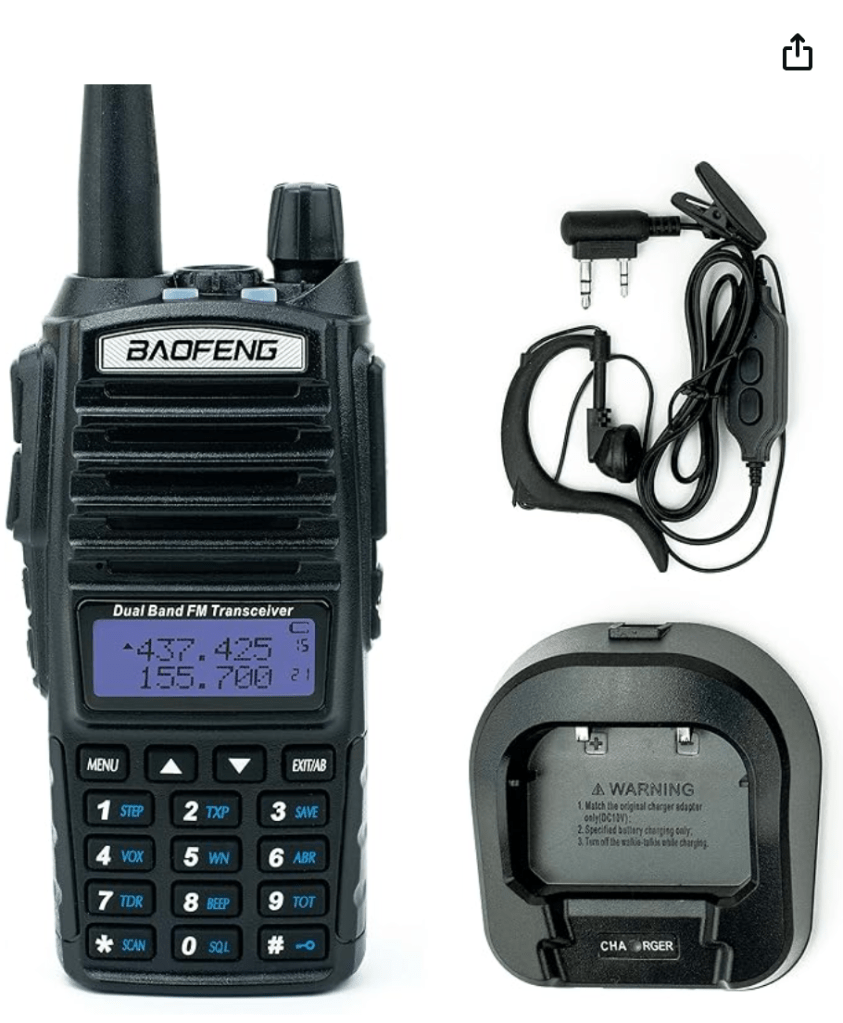
Not ready to invest in getting an amateur radio license, and in hanging an antenna in a tree or putting it on your roof? Look, I’m not really sure about the current legality of this, but Amazon used to sell these Baofeng radios that let you listen to ham channels even if you didn’t have a license. At the time I got some, they were still legal but it was pending in court. Not sure if they’re legal now, but what I am sure of is – if you don’t have a license, you should only use them for listening to the ham stations.
Maritime Radio (for Boat Owners)
So as a Labrador retriever from one of the best field lines in the nation, I love duck hunting. And a lot of duck hunting happens from boats.
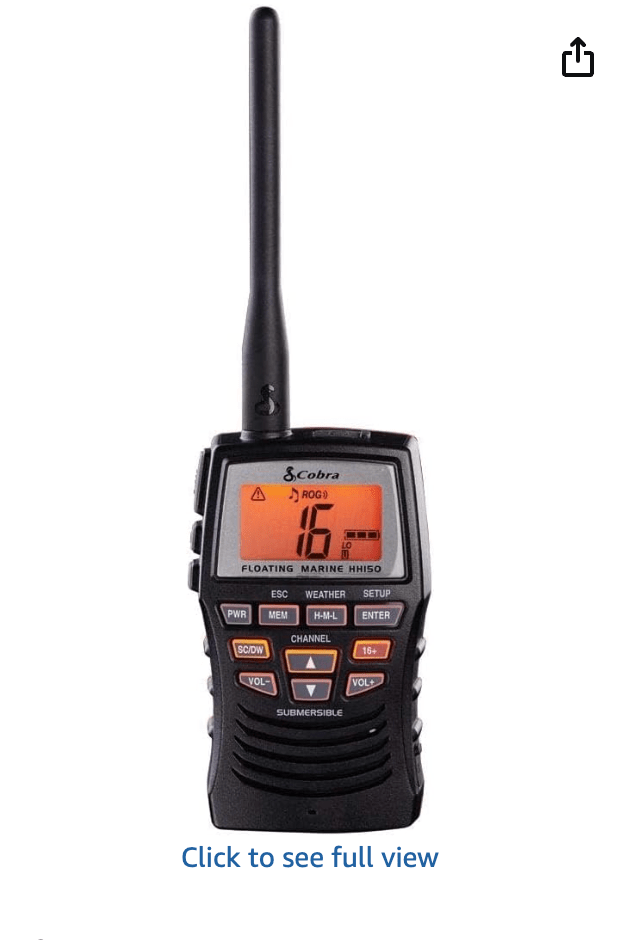
My beloved owner has a maritime radio for when she’s on a boat, usually set to the hailing channel, Channel 16.
Wait – are you suddenly wondering if you could travel by boat if all the roads were out? Are you having the creative idea that maybe you could put in somewhere like the boat ramp at Cook Park, and head down the Tualatin River to get to the Willamette?
Think again, my friend. There’s a small dam near Lake Oswego that will kill you on the way out. You won’t see it before you’re over it – it’s a low head dam.
While maritime radio for boat owners could be interesting for boat owners, from Tigard specifically, it would take a combination of roads being navigable to launches to get you out to see.
Also, if you’re a boat owner, take a moment to calculate how far you could get on your boat model using something like Google Gemini. Is that really far enough to get you out of the disaster, or is it just far enough to strand you and your family far from home when nobody has enough resources to help you?
Maritime radio seems unlikely to be very helpful for us, and river exits also seem unlikely given the Lake Oswego dam, and the hazards like shallow water along the way.
Meshtastic & MeshCore
Meshtastic and MeshCore are both really cool projects. They offer the ability to communicate after a disaster without having to go so far as to get a ham license.
If we were going to go with one – we’d choose MeshCore over Meshtastic because it has more repeaters in the area. But spoiler alert – we wouldn’t go with either because we doubt people will have their repeaters up after the quake, and even if they do, their networks haven’t been load-tested.
Why wouldn’t we go with them? Well – let me ask you this. After the quake, how many people’s stations will have been broken by the shaking? How many will have the ability, will, and supplies to repair them? How many of them will still be in the area? Of those, how many will have an ongoing supply of electricity? If you make up percentages for these things, the remaining stations that will be up is pretty dismal.
Overall, it seems like a cool idea, but it just doesn’t have the numbers and resiliency yet to seem like a viable post-quake option.
All the same, let’s look at the penetration that mesh networks have in this area as of around early April, 2026!
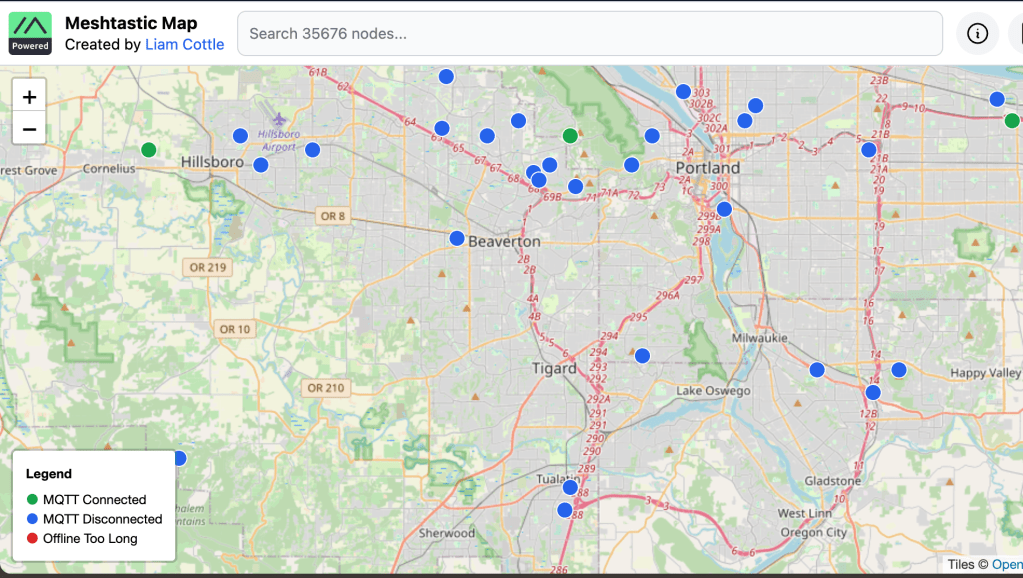
Meshtastic
A screenshot from 3/29/26 of the number of Meshtastic stations in the area – zero in Tigard, though some nearby.
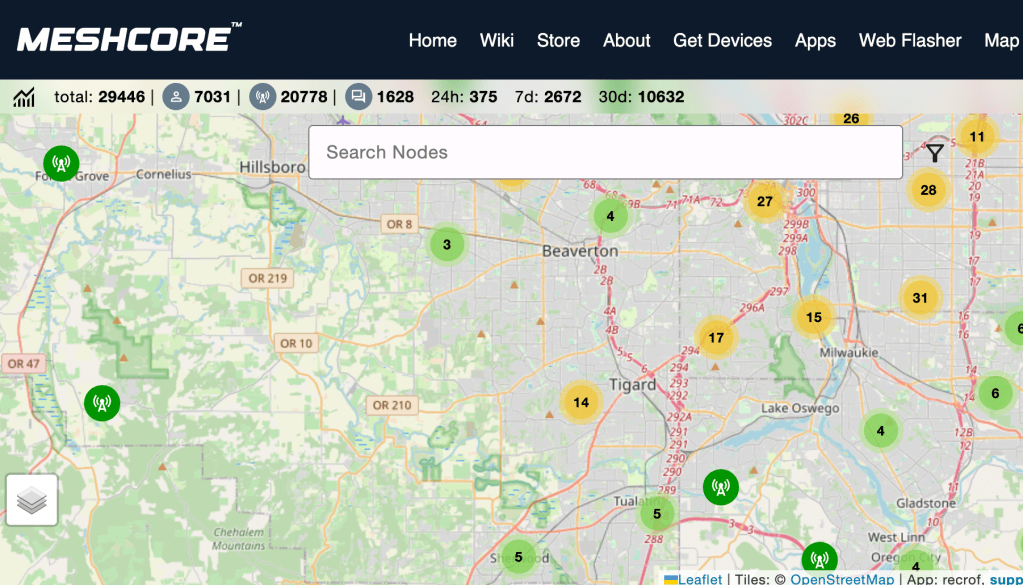
MeshCore
A screenshot from 3/29/06 of the number of MeshCore stations in the area – 14 in Tigard, and many more nearby. Though UK-based, MeshCore has a surprising number of repeaters along the U.S. west coast.
If we were going to use a mesh network for communication after the quake, MeshCore looks most promising. But even if some nodes survived, what bandwidth could they handle? And what if more people in the area have bought hand-held devices to use them, than have actually hung up the hardware needed to provide service – as in, who’s put up repeaters?
We would hate it if nobody put up repeaters, but everyone went out and got messaging devices to use them.
So if you’re going to go with one of these, our recommendation is this – go with MeshCore, and put up a repeater of your own before or while buying devices that can use them. Make sure you can get your repeater back up after it’s damaged from a quake. And find a way to power it after a quake, like through a solar generator, which we’ll cover later.
Otherwise you’re just overwhelming a system you didn’t help build or fund.
The Garmin Ecosystem
Satellite messengers will be the shiznit after the quake.
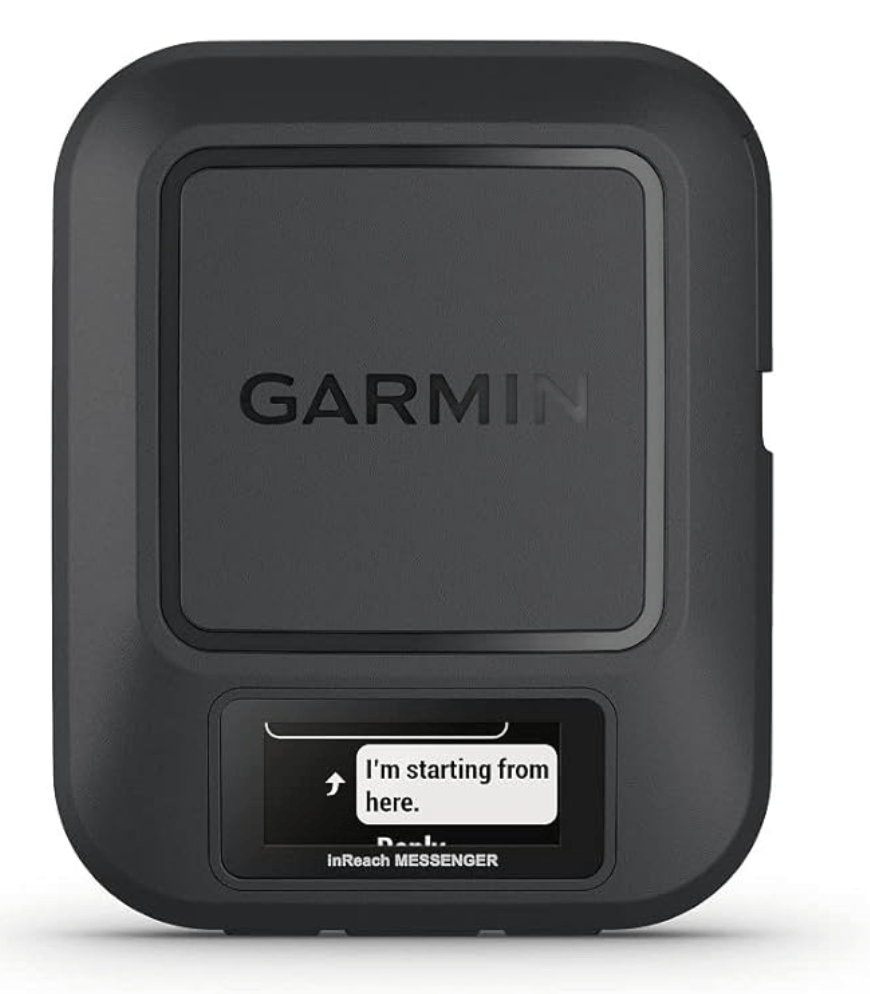
Garmin’s Iridium satellite network has certainly been load-tested after major disasters. If you can pony up for a device ($250 for starters) and a $15/month safety plan, give or take, you’ll be able to text with your loved ones after the quake.
Could you use your iPhone for this? Maybe, but its antenna certainly won’t be on par. Also, iPhones use the Globalstar satellite network, rather than Garmin’s Iridium network. Will Globalstar hold up when the entire U.S. west coast is down? It’s anybody’s guess.
Currently for Garmin, this is the least expensive device. It needs power both to the device itself, and to your phone, so you’re going to also need a way to power both of them after the quake.
My family currently has two of our own Garmins, and we have gifted one to some beloved grandparents, and we’ve encouraged friends to get and configure them. We’re distributed across Tigard, Portland, West Linn, and Vancouver Washington.
After the quake, we will use these to check in about whether we’re okay or if we need help. These will allow us to know how each other are doing without having to do a potentially treacherous and multi-day trip across town to find out.
When not in a post-quake disaster, our family actually still uses our Garmins (though we have the Explorer+) for navigation and communication while camping, hiking, and hunting.
StarLink
AI-generated image of a woman frowning in front of a cybertruck, from Google Gemini.
Look, you might think that because we hunt, we’re conservatives. But actually, we’re liberals. Yeah! Liberals hunt too! It’s the most free range, organic, and ethical of meats you can get! Think about it.
And as liberals, Elon Musk drives us freaking nuts. So it pains us to say this, but if you want internet after a quake, the most likely way to do that is via satellite internet. We would be remiss not to say that Starlink and DirectTV seem like the only ways to do that, but we don’t know about the power needs for each.
If you need to work remotely after the quake to keep your job and lifeline, this might be the only way to do it. But we’ll leave the research to you.
For my family, which includes two remotely employed professionals, we plan to fall back on our 6-month emergency financial fund until we can rejoin the world.
Solar Generators
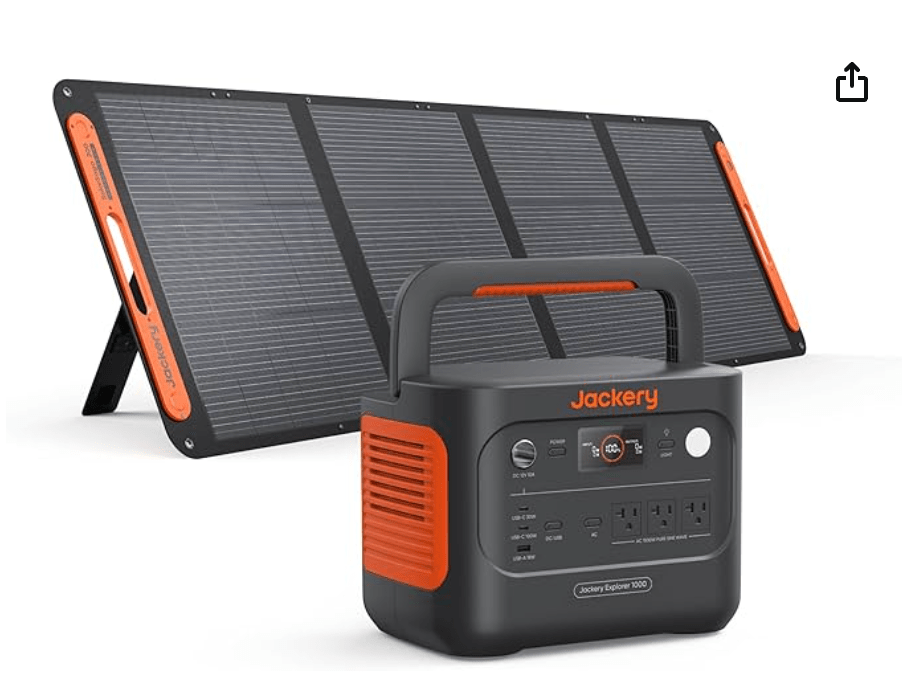
None of the things above will work for beyond a day if there’s no power. There are a lot of options out there, but think about getting a solar panel (to capture electricity) and a battery (to store and peddle it). Jackery is a great brand, but there are other ones that are competitive like GoalZero. Especially if you’ll host a repeater, you’ll need this post-quake to run it.
Gas Generators
These seem really cool because for less money, they often have a way higher output than a solar generator. They could run your refrigerator! However, gas supplies will be gone after the quake, and gas stations won’t have electricity to power the pumps.
Sure, you could store a bunch of gasoline, but you’ll have to take special steps to calculate how much you’ll need, to add fuel stabilizer to it, and to rotate it on a schedule. Also, it won’t get you too far after the quake if you’re powering stuff like your fridge.
For that reason, our own family has not chosen to rely on a gas generator after the quake. Since we have 4 people who we want to keep going for 2 months, it just doesn’t suit our goals.
Your 12V Car Battery
A lot of emergency supplies like radios or even off-grid showers promise to work only on your 12V car battery port. Great!
Hm . . . . but after a quake, won’t you kind of need that if you need to evacuate the area?
For that reason, we will avoid using anything that we’ll rely on our car battery for after the quake. Our car’s most important use will be to drive us around to evacuate, evade fires, or tow our boat or RV.
We’re not going to run our car battery down to run trivial, bonus devices. Your car can save your life. That’s the best use of your car battery – starting your car to go somewhere else, quickly in an emergency.
Conclusion
Hopefully above you’ve found at least one communication approach that works for you, and a way to power it.
For me, since I’m an engineer of a type, I like redundancy. I have a cheap weather radio on a USB charger in my car, 4 walkie talkies charging in my garage, 2 Baofeng ham radios right next to them, I carry a Garmin with me in my purse, and my partner carries the other Garmin.
To power them, I have two Jackery batteries with matching solar panels – one big, and one small.
These will bolster our family’s situation after the Big One hits. Not only will our communication devices be powered, but we’ll probably have a bit extra for entertainment or unanticipated needs.
 Tigard's Unofficial Guide to Earthquake Preparedness
Leave a comment